Summary: William Hill odds reflect more than team form—they track volume, sharp money, and retail liability.
Odds on William Hill move for reasons that have nothing to do with the teams on the pitch. A Tuesday afternoon in March, a Midlands-based trader notices a rush of £20 bets on a 4/1 outsider in a midweek Championship fixture. By 3 p.m.。the price has shortened to 3/1. No news, no injury. Just volume. That's the William Hill odds machine in miniature—part mathematics, part behavioural psychology, part crowd control.The company prices over 40,000 markets on a busy Saturday. Football dominates, but the real margin sits in niche sports and American markets where liquidity is thinner. William Hill odds on a Premier League match might carry a 5% overround;the same operator will build a 12% margin into a Hungarian second-division game. Traders call this “the art of the possible” You can't price what you can't lay. Watch the odds on a lower-league fixture and you'll see the number drift through the week as small stakes accumulate—each bet a tiny vote that pushes the decimal point.
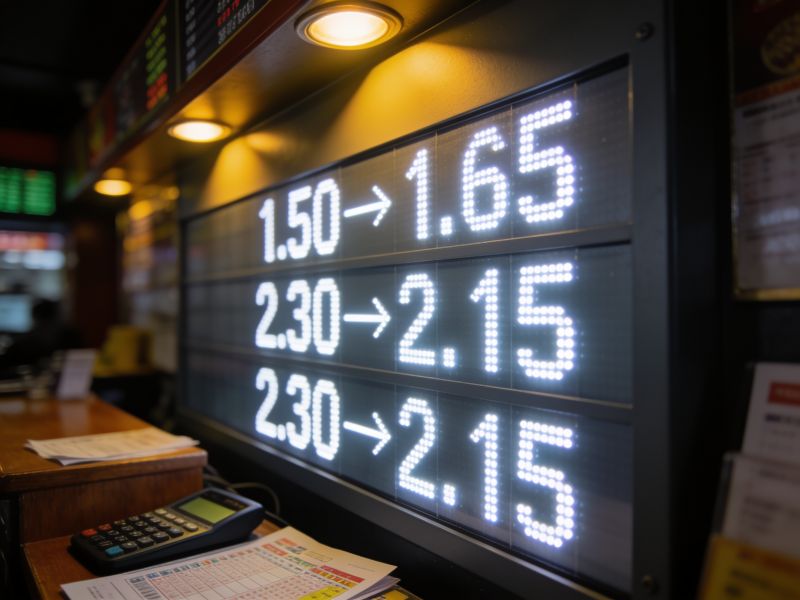
Compare William Hill odds with those from Bet365 on the same event and you'll find gaps of 3–7% on secondary markets, less on top-flight football. That gap isn't incompetence. It's a strategic choice. William Hill's retail heritage—thousands of shops feeding liability data into the algorithm—gives it a different risk profile than pure online books. A trader once told me the shop bet is “stickier”: a punter in Leeds putting a tenner on Leeds to win doesn't hedge with an exchange. That loyalty lets William Hill odds absorb money on popular teams without panicking. Online, an algorithmic surge triggers an instant price cut.What actually moves William Hill odds?Sharp money, mostly. A single £5,000 bet from a known professional account can shift a price faster than a thousand £10 bets from casuals. The company uses profiling software to flag these accounts。but it still honours the bet—then adjusts. In 2022, a syndicate hammered William Hill odds on a Norwegian third-tier match after spotting a late team-sheet omission. The price collapsed from 2/1 to 4/7 within eight minutes. Retail customers saw the shift and followed, creating a feedback loop that had nothing to do with the actual probability. That's the odd truth about odds: they're a price, not a prophecy.For anyone reading William Hill odds as a forecast, a word of caution. The number you see at 9 a.m. on matchday is not the house's best guess. It's the house's best guess *given the money already placed*. Check the overround on a match you know well—add up the implied probabilities from the decimal odds. If they sum to 108%, you're paying an 8% tax for the privilege of betting. William Hill odds on the same event a day earlier might have been 104%. The line moves. And it moves because of people, not physics.